




A Comprehensive Guide to Cooking Oils
Saturated vs. Unsaturated Fats
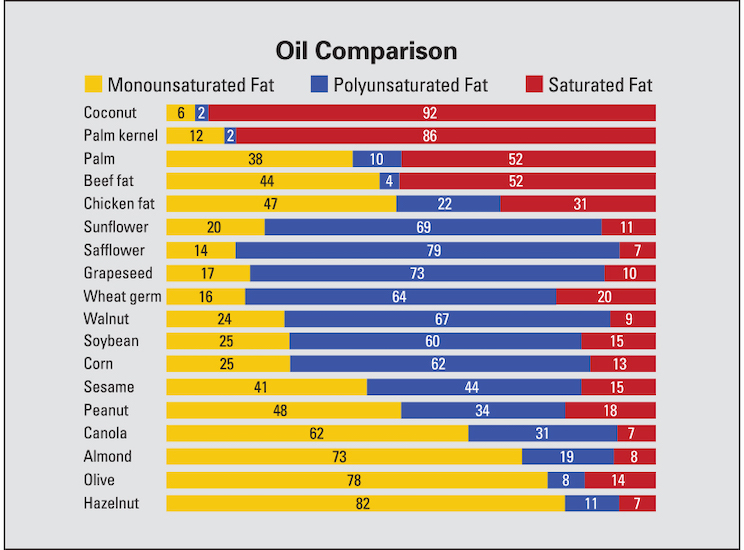
All oils have a mix of saturated and unsaturated fat. According to Harvard Medical School (1), a diet rich in saturated fat is associated with increased, harmful LDL cholesterol levels, which accumulates and forms blockages in blood vessels. Therefore, oils rich in saturated fat should be consumed in moderation, including coconut oil, palm oil, and palm kernel oil.
On the other hand, unsaturated fats may reduce harmful LDL cholesterol levels and should be prioritized over saturated fat. Good mono-unsaturated fat sources include avocado oil, sunflower oil, olive oil, peanut oil, canola oil, and safflower oil. While many folks do not eat enough polyunsaturated fat, studies have linked it to a wide array of health benefits (2). Good sources of polyunsaturated fat are corn oil, sunflower oil, safflower oil, soybean oil, hemp seed oil, walnut oil, flax oil, and grape seed oil.
1. www.health.harvard.edu/staying-healthy/the-truth-about-fats-bad-and-good
2. www.hsph.harvard.edu/nutritionsource/what-should-you-eat/fats-and-cholesterol/types-of-fat/
But some oils taste or smell weird, don't they?
Related Stories:



Hot Menus
- Applebee's Menu
- Arby's Menu
- Burger King Menu
- Chick-fil-A Menu
- Chipotle Mexican Grill Menu
- Cook Out Menu
- Domino's Pizza Menu
- Jersey Mike's Subs Menu
- KFC Menu
- McDonald's Menu
- Panera Bread Menu
- Papa Murphy's Menu
- Pizza Hut Menu
- Starbucks Coffee Menu
- Wendy's Menu
- Chili's Grill & Bar Menu
- Red Lobster Menu
- Texas Roadhouse Menu
- Bonefish Grill Menu
- Olive Garden Menu
